
Designing for the Indian Summer
Designed to be experienced, not just viewed.

Every season asks something different of a home, but few are as demanding as the Indian summer. As temperatures rise and daylight becomes sharper and more relentless, interiors must work harder to maintain comfort. Good design in this context is not simply aesthetic—it becomes environmental, responding to heat, glare, and the need for calm.
Across our residential work at FTS by Sharmilee, we often approach summer design through these considerations: light, spatial balance, materials, and a restrained palette. When these elements are aligned, a home feels cooler, softer, and far more liveable even during the peak of the season.
Light That Softens, Not Overwhelms
Summer light in India is intense and directional. While natural daylight is essential, uncontrolled brightness can make interiors feel exposed and uncomfortable.
In several of our residential bedrooms, we treat light as something to be filtered rather than amplified. Sheer curtains, layered drapery, and diffused lighting fixtures help soften incoming sunlight. The aim is to maintain luminosity without allowing harsh glare to dominate the room.

Artificial lighting plays an equally important role. Warm, diffused sources—particularly concealed lighting and carefully placed bedside lamps—create an atmosphere that feels restful even during long, hot evenings. Instead of relying on a single overhead light, layered illumination allows spaces to transition gently from day to night.
Spatial Design That Allows a Room to Breathe
In warmer climates, spatial planning becomes a tool for comfort.
Bedrooms and lounges that feel open, balanced, and uncluttered naturally remain cooler and calmer. Furniture is arranged with breathing room around it, allowing air to move freely and preventing the visual density that can make a space feel heavy in the summer months.
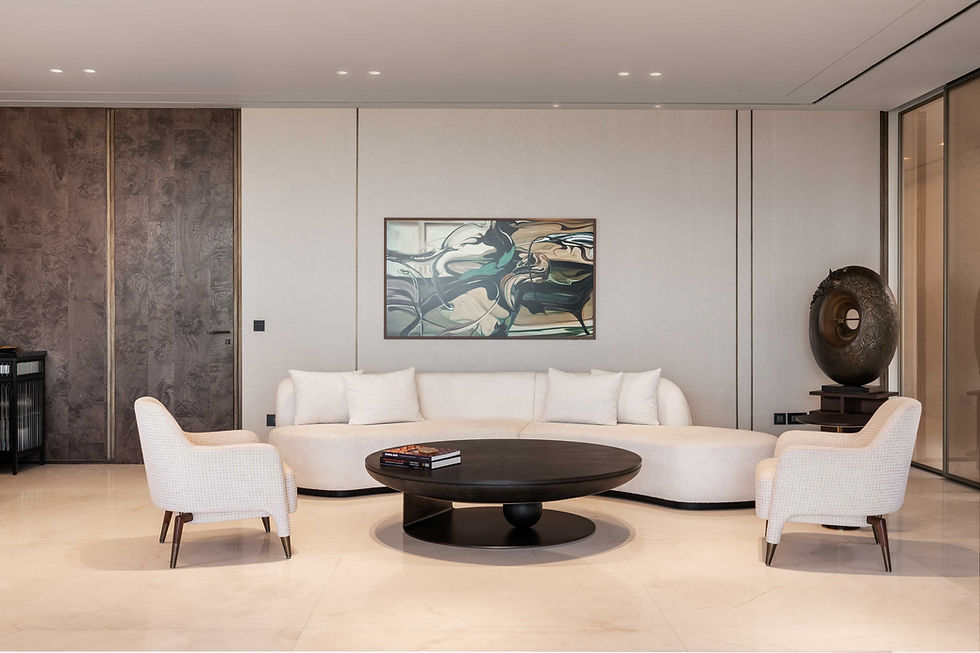
Across several of our projects, we intentionally design low-profile furniture pieces and avoid overly bulky forms in bedrooms. This subtle shift lowers the visual centre of gravity of the room, making ceilings feel higher and spaces feel more expansive.
The result is not minimalism for its own sake, but a spatial rhythm that feels composed and breathable.
Materials That Stay Grounded in Heat
Material selection becomes especially important during the summer.
Soft upholstery, textured fabrics, and natural finishes help regulate the sensory experience of a room. Wood, matte surfaces, woven textiles, and handcrafted details absorb and diffuse light rather than reflecting it aggressively.
In bedrooms particularly, tactile materials create a sense of quiet comfort. Upholstered headboards, soft rugs, and layered fabrics allow the room to feel inviting without becoming visually overwhelming.
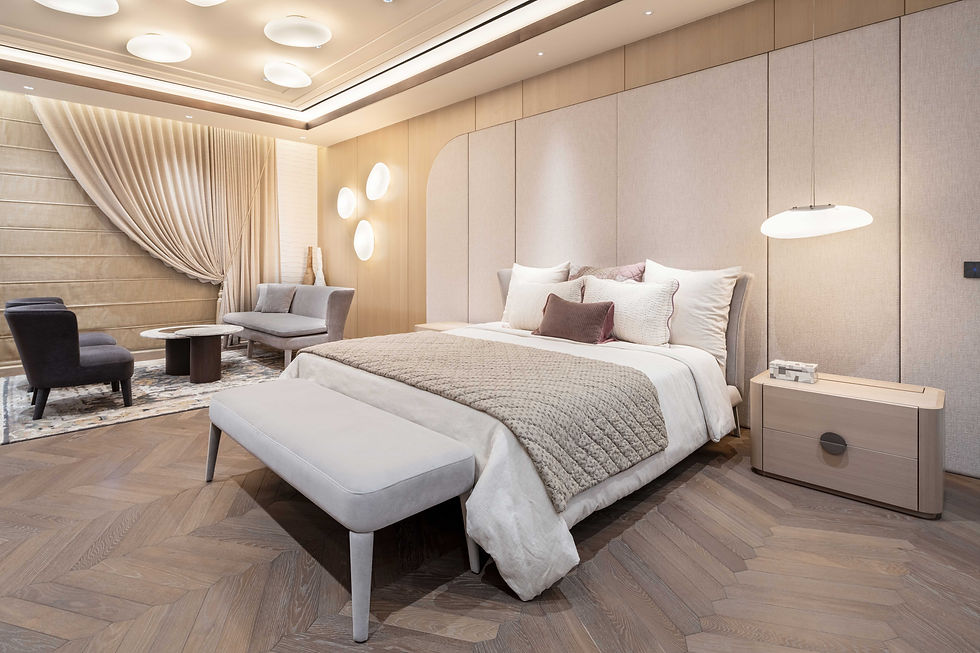
Natural materials also age beautifully over time, developing a patina that makes spaces feel lived-in and grounded—qualities that are essential for interiors designed to endure seasonal extremes.
The Quiet Power of Neutrals
Colour plays a surprisingly large role in how we experience heat.
Rather than relying on bold tones, many of our residential interiors lean toward a palette of neutrals—soft beiges, warm taupes, muted greys, and gentle creams. These colours reflect light subtly and prevent spaces from feeling visually heated or overstimulated.

Neutrals also allow materials and textures to take centre stage. A linen curtain, a textured wall finish, or a handcrafted wooden table becomes far more noticeable when the palette is restrained.
This approach creates interiors that feel timeless and calming, which is particularly valuable during months when the environment outside is anything but.
Small Changes That Can Transform a Home for Summer
While architectural design plays a major role, adapting an existing home for the Indian summer often requires only a few thoughtful adjustments. Bedrooms and lounges, in particular, can benefit from small seasonal changes.
1. Layer your window treatments
Introduce sheer curtains alongside heavier drapes. During the day, sheers allow light to enter while softening glare.
2. Switch to lighter textiles
Replace heavy upholstery, throws, or cushions with breathable fabrics like cotton or linen. Even a small change in fabric weight can make a room feel cooler.
3. Introduce warmer diffused lighting
Swap harsh white bulbs for warmer lighting. Lamps and concealed lighting create softer ambient environments during the evening.
4. Reduce visual clutter
Summer interiors benefit from simplicity. Clearing unnecessary objects from surfaces can instantly make a space feel calmer and more open.
5. Work within a neutral palette
If introducing new decor or soft furnishings, opt for soft neutral tones. They reflect light gently and maintain a sense of quiet composure.

Designing With the Season, Not Against It
The Indian summer is intense, but it also offers an opportunity to rethink how our interiors function. Instead of resisting the season, good design works with it—creating interiors that remain comfortable, elegant, and grounded even during the warmest months of the year.
For us at FTS by Sharmilee, designing with climate in mind is not a constraint. It is simply another layer of thoughtfulness that ensures a space feels as good as it looks. Book your free consultation with our team of experts to know more.


Comments